The model sandbox engineers

"Godparents Wanted!"

How does it work? Early technical and scientific education in kindergarten

To get children of pre-school age excited about basic science in a playful way was the idea that Wolfgang Rabe, an entrepreneur from Wallenhorst, fulfilled himself on his 60th birthday. With a donation of more than ten thousand euros, he set out to find a suitable field of application.

Idea, suggestions, guidelines - using the example of the Andreas Kindergarten, Wallenhorst-Hollage

He found a cooperative partner for the implementation of his plan in the Andreas Kindergarten in his home community. Together with the VDI and the Osnabrück universities, they launched the "Sandpit Engineers" project.

The idea "Here we go round ..."

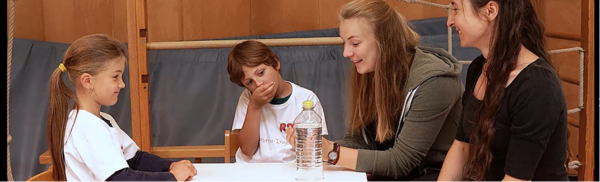
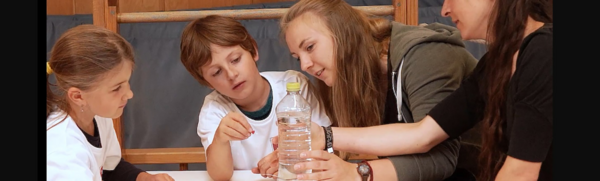
Since the beginning of 2007, preschool children have been able to experience the physical and chemical backgrounds of everyday phenomena in vivid experiments. Students from the fields of technology/physics and education guide the children through simple experiments.

Of course, it is important that the presentation is suitable for children. Therefore, from the very beginning, the aim was to recruit teachers with both technical and scientific training as well as didactic-pedagogical experience. This approach has proven to be very successful in practical implementation.

The project was and is supported by the scientific research results and advice of Gisela Lück, Professor of Chemistry Didactics at the University of Bielefeld. The expert has many years of experience in teaching chemistry to children of kindergarten age in particular.
"The project has been received extremely positively by all those involved and encourages them to take further steps. Early education in science and technology in particular is a task that the economy can shoulder on its own - not only to grow engineers, but also to secure the next generation of technicians in general. We will continue to need good craftsmen and mechanics in the future."

(Wolfgang Rabe, entrepreneur and initiator)

Practical example

"Trying makes you smart"

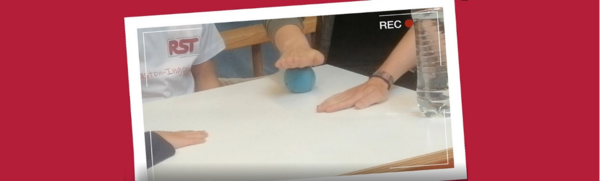
Once a week, students from the Osnabrück University of Applied Sciences are in charge at the kindergarten. Whether it's the law of leverage, the inclined plane, the solubility of substances in liquids or the expansion of air - in simple experiments, the children decipher the riddles of inanimate nature together with their student teachers.

In groups of five, the children experience the physical or chemical forces and reactions behind everyday things in just under an hour each week during their preschool year.

Many of the children's questions are answered by the experiments. And it is amazing how quickly the little ones grasp the background information presented. And because the experiment sequence is drawn on after each experiment, what is learned remains well in the children's minds. The so-called researcher's folder serves as a reminder and increases the importance of the experiments for the children enormously.

Here's what the preschoolers had to say about it:

Jonas: "I especially liked the experiments because everyone got to do them and they were so great."

Sören: "I like what we are doing. I liked the candy in the tea light jar, and then we put that in the water and ate it."

Tom (about the Ü-egg bomb): "When we made the explosion, that was great. That's when we put an effervescent tablet in an Ü egg and then it exploded. All the experiments were good."

Ben: "... I liked everything about the projects. I liked that there were so few of us kids."

Pia: "I especially liked that we were always doing things!"

"Even if it sounds surprising: phenomena from inanimate nature (chemical or physical) are easier to explain to children than those from animate nature." (Gisela Lück, Professor of Chemistry Didactics, University of Bielefeld)

Scientific motivation

Well-founded play (activity)

Children want to discover their world. Their thirst for knowledge is innate - and what could be more exciting than exploring the natural world around them?

Small everyday puzzles are encountered by children everywhere: Why do I have a shadow? How can a magnet stick without glue? When does a balloon fly? Why do you use soap to wash your hands?

Can you answer these questions for children in such a way that they understand the explanation? Gisela Lück, an expert in the field of learning, is convinced that children in kindergarten best satisfy their natural urge to explore with well supervised experiments.

The state government has also recognized this and has stipulated in its orientation plan for education and upbringing "... that the day care centers open up opportunities for independent experimentation as learning workshops. In this way, a basic understanding of science is acquired."

Already Jean Piaget (1896-1980), forefather of developmental psychology, manifested in his stage theory that e.g. primary school children have to act actively in order to comprehend contents. Numerous series of experiments by modern renowned scientists (Wagenfeld, Lück, Erikson) and pedagogues prove that even four-year-olds can understand abstract causal relationships if they are conveyed in a child-friendly manner.

The project at the Andreas Kindergarten in Wallenhorst provides new data in this regard. Following the experiments, the children are interviewed about their experiences. These interviews are documented so that up-to-date results are available for later scientific evaluations.

In addition, the Andreas Kindergarten has been registered as a consultation kindergarten. As a model for other facilities, so to speak.

"Children are patient naturalists who want to get to the bottom of things. No non-fiction book, computer program, or television program can replace doing it yourself."

(Gisela Lück, Professor of Chemistry Didactics at the University of Bielefeld)

Guidelines

Recommended for imitation!

For the kindergarten

  • look for a sponsor
  • find a suitable practice room where the experiments can be carried out in peace and quiet
  • set a specific day of the week for the practice sessions
  • form groups with a maximum of 5 children
  • determine the age group (children from 5 years)
  • use the experimental units to train your employees
  • work out a learning concept with mentors and trainers
  • compile a list with all the necessary materials

For the entrepreneur

  • look for a kindergarten as a partner, e.g. the one nearby
  • take some money in hand (about 2.500 € per year)
  • ask students or technical specialists in part-time or retired positions if they could imagine teaching children
  • contact the Association of German Engineers (VDI)
  • determine the scope and duration of the training units
  • work out a learning concept with the kindergarten management and instructors
  • By the way: Kindergartens are non-profit institutions and can benefit from tax advantages.

"Even small children try to form a picture of the world - which they are constantly developing. Children accomplish much more in this area than could be assumed up to now. ... Supported in time, learning is easier for them later on."

(Prof. Elsbeth Stern, TH Zurich)

Echo

"What others are saying: ..."

"Taking young researchers by the hand: In the Sandbox Engineers project, children learn from students and vice versa." (Neue Osnabrücker Zeitung, 03/31/2008)

"Oh, that's how it works! With exciting experiments, more and more kindergartens are awakening the interest of little researchers in the natural sciences." (Familie & Co. 01/2008)

"In kindergarten, music and painting are more common than research. That's why girls in particular don't even dare to study technical subjects." (Financial Times Deutschland 9.4.2007)

"Getting excited about technology through play: Good and sustainable education starts in kindergarten ... Interest in technology is already awakened in the sandbox." (Welt am Sonntag 2.9.2007)

"For innovations, you don't just need money, but above all people who put ideas into practice." (Marco Graf, Chief Executive of the Osnabrück-Emsland Chamber of Commerce and Industry)

"There is no hostility to technology in Germany, but there is a lack of understanding of technology." (Willi Fuchs, Director of the Association of German Engineers, VDI)

The project "Sandbox Engineers" is supported by the VDI Bezirksverein Osnabrück-Emsland.

"Would you also like to enable other sandbox engineers to play, experiment and research? Give us a call or send us an email. We are at your side with advice and support in all things (practical experiment descriptions on the Internet!)"


Contact

Ev.-luth. Kindergarten St. AndreasBritta Finke (Head)Johannisstr. 549134 WallenhorstTel.: 0 54 07/3 9147E-Mail: andreas-kindergarten@web.de

Wolfgang RabeOtto-Lilienthal-Str. 1949134 WallenhorstTel.: 0 54 07/87 66-0E-Mail: wolfgang.rabe@rst.eu